
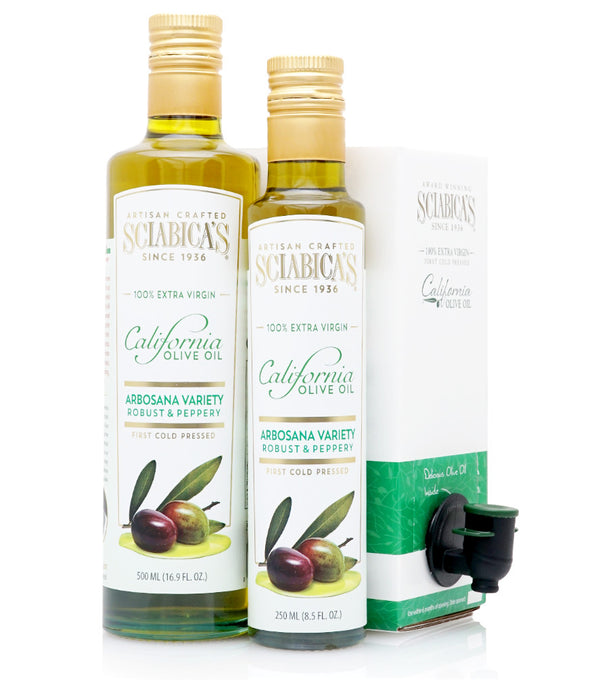

Big, bold & bitter.
Boldness meets balance in this expressive single-varietal olive oil. Crafted from freshly harvested green Arbosana olives, this extra virgin oil offers a full, assertive flavor perfect for those who love character in every drop.
-
Aroma & Flavor Notes:
Vibrant aromas of green tomato and fresh almond mingle with a bold peppery edge. Subtle hints of sweet almond round out the profile. -
Mouthfeel & Finish:
Rich and full-bodied, the oil delivers a pleasantly lingering peppery finish. The robustness is tempered by a clean, slightly bitter core that adds dimension. -
Best Uses:
Drizzle over grilled meats, roasted vegetables, or soups to elevate flavors with spice and depth. Use for bread dipping when you want a peppery kick. Incorporate in dressings or finishing sauces for bold salads or savory dishes.

"Lush, rich, and gently bitter"
- Cook's Illustrated Cook's Illustrated's March 2017
"We think these premium oils are worth every penny." It's awesome that they provide a list of premium olive oils that make the cut. Even more awesome that Sciabica's [Arbosana] is the most affordable on the list - far more affordable in most cases!
Absolutely. Extra virgin olive oil is excellent for sautéing, roasting, baking, and even frying. It is naturally rich in monounsaturated fat and antioxidants and holds up very well to nearly all cooking temperatures.
The Myth That Won't Die
Somewhere along the way, a rumor took hold: don't cook with olive oil. It'll smoke. It'll burn. It'll turn toxic. Use a "neutral" oil instead.
It's one of the most persistent myths in the kitchen — and it's wrong. A landmark peer-reviewed study published in Acta Scientific Nutritional Health tested ten common cooking oils under real frying conditions and found that extra virgin olive oil was the most stable and safest oil to cook with.1
Let's break down what the science actually says — and why EVOO deserves a permanent spot next to your stove.
What the Study Found
Researchers at the Modern Olives Laboratory in Australia heated ten cooking oils — including extra virgin olive oil, refined olive oil, coconut oil, canola oil, rice bran oil, grapeseed oil, avocado oil, peanut oil, sunflower oil, and butter — to temperatures used in real cooking scenarios (up to 240°C / 464°F).
They measured two things that actually matter for safety and nutrition:
- Polar compounds — toxic byproducts that form when oils break down under heat
- Oxidative stability — how resistant an oil is to degradation
The results were clear. Extra virgin olive oil produced the least polar compounds of any oil tested — including coconut oil, avocado oil, and canola oil, all of which are commonly marketed as "better" for cooking. EVOO also ranked highest in oxidative stability, meaning it held together under heat better than the competition.1
What About the Smoke Point?
The smoke point argument is the most common reason people avoid cooking with olive oil. The logic goes: olive oil has a lower smoke point than other oils, so it must be worse for high-heat cooking.
This logic is flawed for two reasons.
First, smoke point is not the same as stability. An oil can start smoking at a lower temperature and still produce far fewer harmful compounds than an oil that smokes at a higher temperature. The study confirmed this directly — EVOO outperformed higher-smoke-point oils on every safety metric.1
Second, most home cooking never reaches the smoke point of olive oil anyway. Sautéing vegetables, searing proteins, roasting at 400°F — these are all well within the safe range for extra virgin olive oil.
Why EVOO Is So Stable Under Heat
The stability of extra virgin olive oil comes down to two things: its fatty acid profile and its natural antioxidants.
High in Monounsaturated Fat
EVOO is roughly 70–80% oleic acid, a monounsaturated fat. Monounsaturated fats are significantly more resistant to oxidation than polyunsaturated fats (the kind found in canola, sunflower, and grapeseed oils). Polyunsaturated fats have multiple double bonds that are vulnerable to heat — they break down faster and produce more harmful compounds when cooked.
Rich in Natural Antioxidants
Fresh extra virgin olive oil is loaded with phenolic compounds — natural antioxidants that actively protect the oil from oxidative breakdown. These same compounds are responsible for the health benefits of EVOO, and they do double duty by stabilizing the oil during cooking. Refined oils and seed oils have had these protective compounds stripped away during processing, leaving them more vulnerable to heat damage.
What Happens to the Phenolics When You Cook?
Some phenolic content is lost during cooking — that's true. But the oil itself remains stable and safe, and meaningful antioxidant activity is retained, especially at lower and moderate cooking temperatures. The study found that EVOO's superior stability held even at high frying temperatures, which speaks to just how robust its natural antioxidant profile is.1
The practical takeaway: use a high-quality, fresh EVOO for cooking, and use it generously. You'll get the flavor, the stability, and meaningful nutritional benefit even after heat.
The Oils That Performed Worse
The study's findings on other oils are worth noting:
- Grapeseed oil — high in polyunsaturated fats, it produced significantly more polar compounds under heat
- Sunflower oil — similarly high in polyunsaturated fats, it degraded quickly at frying temperatures
- Canola oil — often recommended as a "healthy" cooking oil, it underperformed EVOO on stability
- Coconut oil — despite its reputation, it did not outperform extra virgin olive oil
The oils most commonly recommended as substitutes for olive oil in high-heat cooking are, in many cases, less stable and produce more harmful compounds when heated.1
How to Cook With Olive Oil
There's no special technique required. Use it the same way you'd use any other oil:
- Sautéing and stir-frying — medium to medium-high heat, EVOO handles it easily
- Roasting — toss vegetables or proteins in olive oil before roasting at 400–425°F
- Pan searing — works well for fish, chicken, and vegetables
- Baking — substitute olive oil for butter or vegetable oil in most recipes
- Deep frying — yes, even this. The study tested frying temperatures specifically, and EVOO still came out on top
The one thing to avoid: letting the oil sit in a pan over high heat with nothing in it for an extended period. That applies to every oil, not just olive oil.
Fresh Oil Matters Most
The stability advantages of extra virgin olive oil are tied to its freshness. An old, oxidized, or improperly stored EVOO has already lost much of its antioxidant protection before it ever hits the pan. This is why sourcing matters.
Our oils are cold-pressed from California-grown olives and milled quickly after harvest. When you order direct from us, your olive oil has been stored properly for its entire lifespan — from the mill to your kitchen. That means you're getting the full stability and flavor benefits the science describes.
Whether you reach for our bold, peppery Robust Extra Virgin Olive Oil or our smooth Buttery Extra Virgin Olive Oil, you're cooking with one of the most stable, healthiest oils available — and the science backs it up.
1 De Alzaa, F., Guillaume, C., & Ravetti, L. (2018). Evaluation of Chemical and Physical Changes in Different Commercial Oils during Heating. Acta Scientific Nutritional Health, 2(6), 2–11. https://actascientific.com/ASNH/pdf/ASNH-02-0083.pdf
Phenolics are naturally occurring compounds in extra virgin olive oil that contribute to its flavor, stability, and health benefits. They are responsible for much of the bitterness and peppery sensation you may taste in a robust olive oil. Though they offer powerful health benefits, higher is not necessarily better. We believe the best olive oil is one you enjoy enough to use generously and often.
Is it Phenolics or Polyphenols?
Phenolics is the accurate term. A large family of plant compounds that includes both monophenols and polyphenols. While the term “polyphenols” is widely used, it isn’t chemically accurate. In fact, one of the most celebrated health compounds in olive oil, oleocanthal, is a monophenol.
MONOPHENOLIC COMPOUND

POLYPHENOLIC COMPOUND

What Are the Key Phenolics in Olive Oil?
The three most studied and health-relevant phenols in olive oil are:
- Oleocanthal (monophenol) — a natural anti-inflammatory that works similarly to ibuprofen
- Oleuropein (monophenol) — linked to cardiovascular protection and antimicrobial activity
- Hydroxytyrosol (monophenol) — one of the most potent antioxidants found anywhere in nature
Why Are Phenolics Good for You?
Phenols protect your body at the cellular level by neutralizing free radicals — unstable molecules that damage cells, accelerate aging, and drive chronic disease. Research consistently links high-phenol olive oil consumption to measurable health benefits.
Reduced Inflammation
Chronic inflammation is a root cause of heart disease, diabetes, and cancer. Oleocanthal in particular has been shown to inhibit the same inflammatory enzymes targeted by common NSAIDs — without the side effects.
Improved Heart Health
Phenols help prevent the oxidation of LDL ("bad") cholesterol — the process that leads to arterial plaque. They also support healthy blood pressure and improve arterial flexibility.
Brain Protection
Oleocanthal has been studied for its potential role in clearing amyloid plaques associated with Alzheimer's disease. Early research is promising, and the Mediterranean diet — anchored by olive oil — is consistently linked to lower rates of cognitive decline.
Gut Health
Phenolic compounds act as prebiotics, selectively feeding beneficial gut bacteria. A healthy microbiome is linked to better immunity, mood, and metabolic function.
Antimicrobial Effects
Oleuropein has demonstrated activity against harmful bacteria and viruses, including some antibiotic-resistant strains.
How Much Phenolics Do You Need?
The European Food Safety Authority (EFSA) has established that 5mg of hydroxytyrosol and its derivatives per day provides measurable antioxidant protection. That's achievable with approximately 2 tablespoons of moderately-high phenolic extra virgin olive oil daily.
Freshness Is the Most Important Factor
Here's what most people don't know: phenols degrade over time. No matter what style of olive oil you prefer — bold and peppery, smooth and buttery, or anywhere in between — the fresher the oil, the more phenolics it retains. An oil that was rich in phenols at harvest can lose a significant portion of that content within months if stored improperly or simply left sitting on a shelf too long.
Phenol content is also highest when:
- Olives are harvested early — picked when still green and slightly underripe
- Oil is cold-pressed and minimally processed — heat and chemical processing destroy phenols
- Oil is stored correctly — away from heat, light, and air after bottling
Refined olive oils and many mass-market "extra virgin" labels have had most of their phenol content stripped away through processing or lost through age and poor storage.
Should I use high-phenolic olive oil?
If you want to use olive oil like a supplement, taking a daily shot of a high-phenolic olive oil is certainly an option. But my family has always encouraged people to choose the olive oil they enjoy most.
An intensely bitter and peppery oil may be packed with phenolics, but it won’t do you much good sitting in the cupboard. The greatest benefits come from making olive oil a regular part of your diet. Find an olive oil you love, then put it on everything!
What is considered "high phenolic"?
To make matters more confusing, phenolic content can be measured in different ways, so the same olive oil can produce different numbers depending on the testing method.
| Phenolic Level | Colorimetric | HPLC |
|---|---|---|
| LOW | Under 150 mg/kg | Under 250 mg/kg |
| MODERATE | 150 to 300 mg/kg | 250 to 500 mg/kg |
| HIGH | Over 300 mg/kg | Over 500 mg/kg |
What about those 1,000+ claims?
Phenolic claims don’t always match what independent testing finds in the bottle. Age, storage and testing methods can all affect the numbers. Freshness and proper storage is often more important than the initial number.
We’re also less interested in chasing the highest total than in which phenolics are present, especially oleocanthal. Oleocanthal creates that distinctive peppery burn in the back of your throat, so if there’s no burn, there’s probably not much oleocanthal either.
The Sciabica Difference
Our oils are cold-pressed from California-grown olives and milled quickly after harvest. Whether you reach for our high-phenolic Robust Extra Virgin Olive Oil or our Buttery Extra Virgin Olive Oil, you're getting oil fresh and stored properly.
When you order direct, you know your olive oil has been stored properly for its entire lifespan.
Go to the source.
FARM TO TABLE SINCE 1936
We are makers, not marketers. When you choose Sciabica’s, you’re going straight to the family behind your olive oil (and the oldest mill in the US). In today’s world, that’s something special and increasingly rare.
From the grove
To our family mill
To the bottle

To your home
Customer Reviews
I am thrilled with my choices of olive oil that I ordered from your company. Not only did they arrive promptly, the packaging was wonderful and I like the fact that you’re saving the environment from big cardboard boxes.
The flavors are rich, smooth and delicious and I can’t wait to share with my friends and family. I will definitely be ordering again. So glad I found your company!
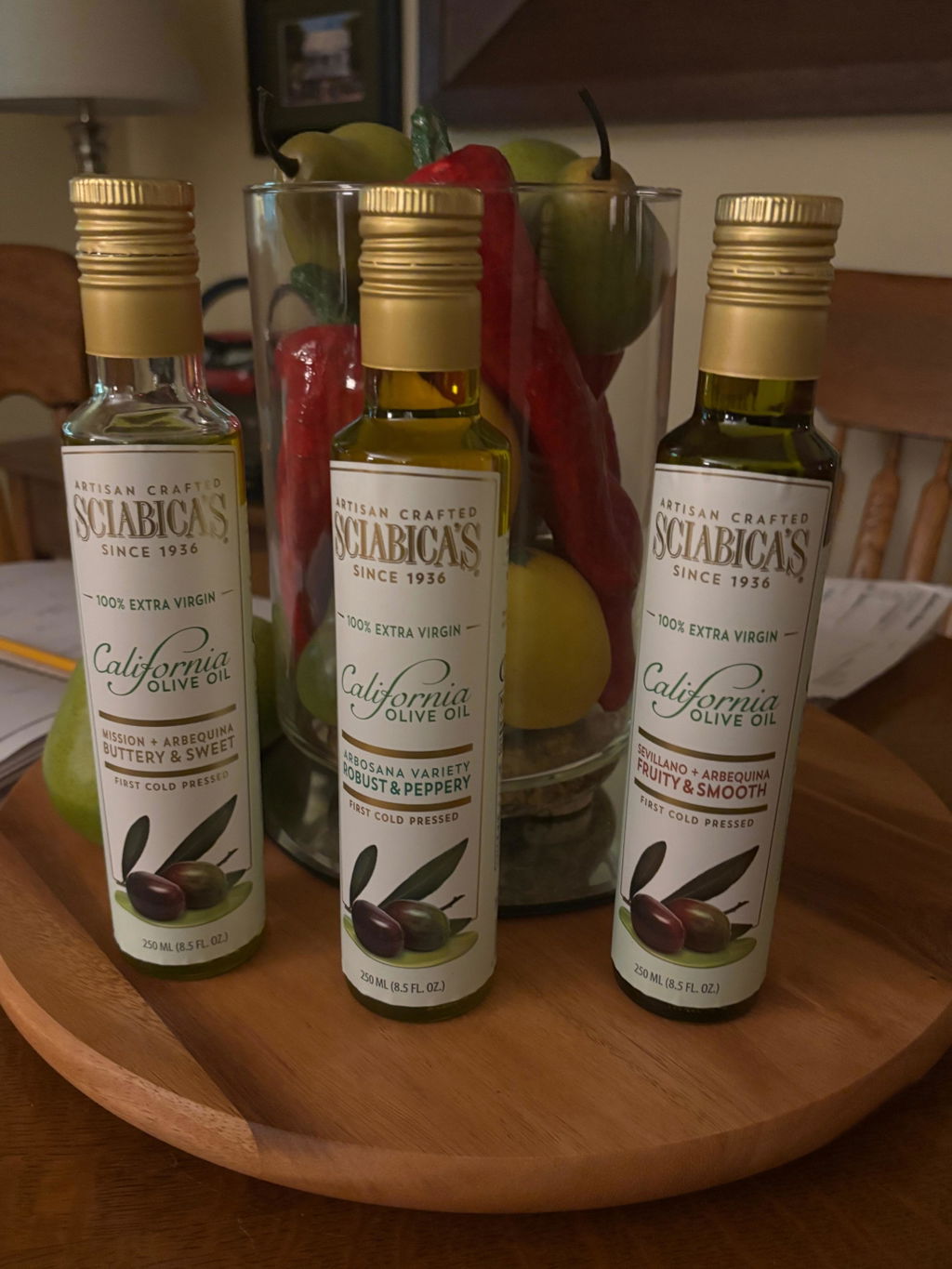
This is so delicious! I put it on top of steamed veggies instead of butter. I can't have butter (dairy). It really adds a wonderful flavor! Plus, it's great for dipping bread in.

I grew up in the farmland of the San Joaquin Valley and have loved your olive oils no matter where I lived from Oregon to now the Central Coast of California. We cook with them, use them in recipes, use them to dip bread, use the lemon over vanilla ice cream and even for our skin. Your shipping policy makes it possible for us to have them and never run out. I love visiting your tasting room when we visit family, but thanks for your great shipping policies!
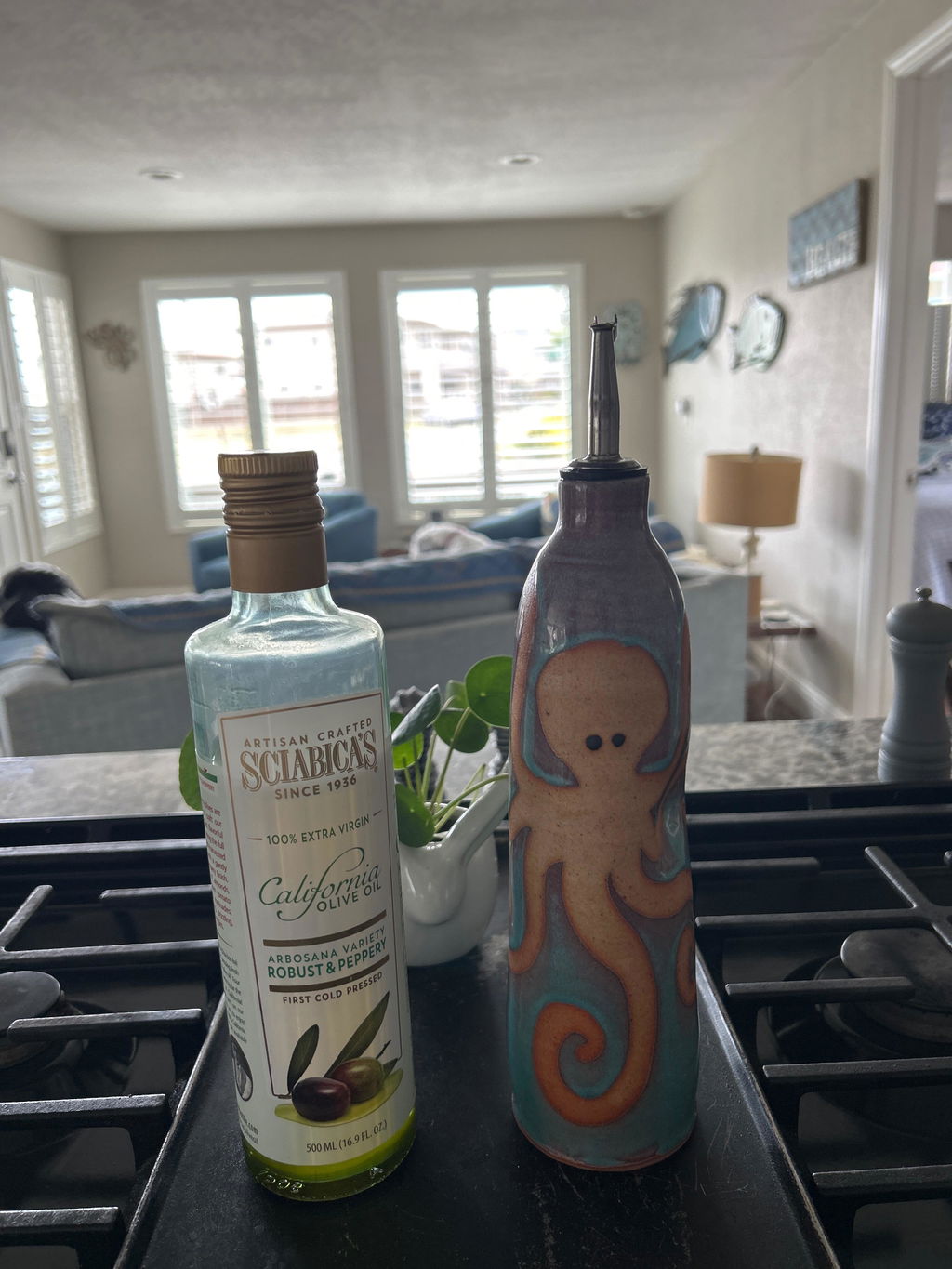
Sciabica Olive Oil has endless options and I've tried many of them. Also, the Balsamic Vinegar is amazing. A customer for life.
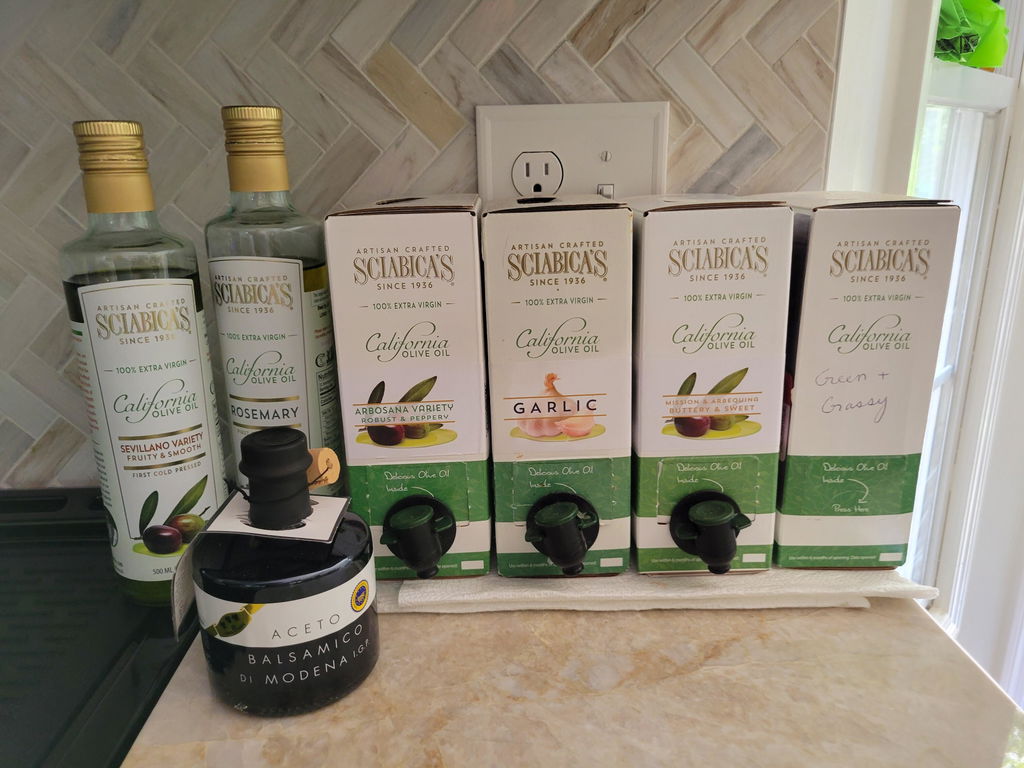
We discovered this oil at an Italian restaurant in Modesto and agreed it was the best tasting olive oil we’ve ever tasted. The peppery flavor is just right—not too spicy.
Love this company and product.
I love robust and bitter flavor oils for drizzling on cooked food, toasts, salads and my oatmeal.
Just took advantage of 5 for one price sale for gift giving. Arrived timely and solidly packed.
Thank you!
wonderful on pasta with parmesan or Romano
Wonderful, flavorful reliably authentic olive oil that adds flavor and nutritional enhancement to any meal! Love this oil in my homemade salad dressing
I so love all your flavors I share with family
Love this Peppery Olive Oil, which does some of my seasoning for me. I use it on salads with apple cider vinegar or for stir frying. The taste is exquisite (as are all Sciabica's oils) - smooth and delicious!
Best Ever as are all Sciabica oils Always used them when I lived in Modesto, and continue to use them now that I have moved to Washington.
This olive oil tastes bright, green, and a little spicy at the end. It has a fresh, peppery bite with a touch of almond, making it a good choice when you want an olive oil with more personality than a soft, buttery one. I love it; it’s an absolute favorite.
Visited three years ago on trip with Collette. Was great! Been using the oils since then.
Delicious olive oil for dipping and dressing
Love !!!!!
We received our order within a few days of placing our order. Very quickly. I love the robust & peppery flavor and I drizzle in a little balsamic vinegar in with it, great for dipping and salads. Love it.
This is a smooth buttery oil with a slight flavor to enhance your salad, dips or whatever. Good quality is the Sciabica hallmark. Your guests will comment & thank you.
Thank you
A favorite olive oil to use with cabbage roasting.
Have been buying their olive oil for years, tastes great. Visited their facility once. This is the only brand I can trust.
After tasting your products I no longer buy elsewhere. Great quality, great Service and great convenience. What’s not to love?
These olive oils and the Sticky Balsamic are absolutely the best taste and quality. My online order was a big one because I convinced two neighbors to order with me. We love them
I’ve been buying these olive oils for 20 years I got to meet uncle Toni at the store in Modesto.what a great man . Told me stories and that he took a Tbl of basil oil every day. Thank you for following in his footsteps. Julie
Been ordering for the past 10years from Oregon. Before that I lived in Modesto, and used your oils for several years. Meet your father or grandfather when he was still running this business. Great customer service and great shipping rate. Keep it up your doing a great job.
Fresh and healthy
So good!
This oil is absolutely delicious. When summer produce is at its peak a drizzle of this olive oil is all it needs.
We have been ordering this fine EVOO for many years and panic sets in if it stars getting low on our shelf. The amazing complexity and depth of deliciousness is rare to find.
Can’t recommend this highly enough for drizzling or making no-cook things like pesto or salad dressing. Exceptional taste, absurd value.
Love the oils & vinegars! Best favors, quality and they are our extended families favorite!
Great taste

Flavorful Salad Dressing
You may also like
Why clear glass?
We prefer transparency. Literally.
Studies show UVA light is the culprit in aging olive oil. Your car windshield is perfectly clear, but treated with UV inhibitors and blocks nearly all UV.
Unfortunately, it's not feasible to treat bottles with UV inhibitors, so protection comes from proper storage and a large label that literally shields your olive oil.
We choose clear glass because it lets you see the color of your olive oil, one of the best indicators of freshness and age. Green glass isn't bad, but it is a good way to hide bad oil.
Best of all, we keep your olive oil in the dark, all the way to your doorstep. That's much better than a green bottle on a store shelf ;)